Starting with The Best Airconditioners for Urban Apartments, this guide delves into the world of cooling solutions for city living, offering valuable insights and comparisons to help you make an informed decision.
Exploring the various types, sizes, and energy efficiency aspects of air conditioners, this guide aims to simplify the process of choosing the right unit for your urban space.
Types of Air Conditioners
Air conditioners are essential appliances for urban apartments, providing much-needed relief during hot summer days. There are several types of air conditioners available, each with its own set of advantages and disadvantages. Let's explore the different options: window, portable, and split air conditioners.
Window Air Conditioners
Window air conditioners are commonly used in urban apartments due to their affordability and easy installation process. They are mounted on windows and provide efficient cooling for smaller spaces. However, they may not be suitable for apartments with limited window space or specific restrictions on external units.
Portable Air Conditioners
Portable air conditioners offer flexibility as they can be moved from room to room as needed. They do not require permanent installation, making them ideal for renters. However, portable units may be less efficient than window or split air conditioners and can be noisier.
Split Air Conditioners
Split air conditioners consist of two units: one indoor and one outdoor. They offer quiet operation, energy efficiency, and better cooling performance compared to window or portable units. Split systems are more expensive upfront and may require professional installation, but they provide consistent and even cooling throughout the apartment.Overall, the choice of air conditioner for an urban apartment depends on factors such as budget, space constraints, and desired cooling efficiency.
Each type has its own pros and cons, so it's essential to consider these factors before making a decision.
Size and Cooling Capacity
Choosing the right size and cooling capacity for air conditioners in urban apartments is crucial for optimal performance and efficiency. An improperly sized unit can lead to discomfort, high energy consumption, and unnecessary costs.
Calculating the Appropriate AC Size
When determining the appropriate size of an air conditioner for your urban apartment, it's essential to consider the room dimensions. A simple guideline to follow is to calculate the square footage of the room by multiplying the length and width.
For example, a room that is 10 feet by 12 feet would have a square footage of 120 square feet.
AC size (BTUs) = Length x Width (in feet)
Once you have the square footage, you can use the following general guidelines to determine the cooling capacity needed:
100 to 150 square feet
5,000 to 6,000 BTUs
150 to 250 square feet
6,000 to 8,000 BTUs
250 to 300 square feet
8,000 to 10,000 BTUs
Impact of Undersized or Oversized Air Conditioners
An undersized air conditioner will struggle to cool the space effectively, leading to longer running times, increased energy consumption, and reduced comfort. On the other hand, an oversized unit will cycle on and off frequently, resulting in poor humidity control, uneven temperatures, and higher energy bills.Therefore, it is essential to choose an air conditioner with the right size and cooling capacity for your urban apartment to ensure optimal performance, energy efficiency, and comfort.
Energy Efficiency and Cost
When it comes to air conditioners in urban apartments, energy efficiency is key to not only reducing electricity bills but also minimizing environmental impact. Energy-efficient models can make a significant difference in both cost savings and sustainability.
Energy Efficiency Ratings: EER and SEER
Energy efficiency ratings like Energy Efficiency Ratio (EER) and Seasonal Energy Efficiency Ratio (SEER) are important indicators when comparing air conditioner models
Typically, the higher the EER or SEER rating, the more energy-efficient the air conditioner.
Cost Savings with Energy-Efficient Models
- Energy-efficient air conditioners consume less electricity, leading to lower energy bills over time.
- By investing in a high EER or SEER rated unit, you can potentially save hundreds of dollars annually on cooling costs.
- Some energy-efficient models may qualify for rebates or incentives from utility companies, further reducing the initial cost of purchase.
- Additionally, lower energy consumption means reduced strain on the electrical grid, contributing to a more sustainable urban environment.
Installation and Maintenance
When it comes to installing and maintaining an air conditioner in urban apartments, there are key steps and practices that need to be followed to ensure optimal performance and longevity of the unit.
Installation
- Ensure proper placement of the AC unit to allow for adequate airflow and efficient cooling.
- Seal any gaps around the unit to prevent air leakage and improve energy efficiency.
- Consult a professional for installation to ensure safety and proper functioning of the air conditioner.
Maintenance Tips
- Regularly clean or replace air filters to maintain good air quality and prevent dust buildup.
- Keep the outdoor unit free from debris and vegetation to allow for proper ventilation.
- Schedule regular servicing by a professional to check for any issues and ensure optimal performance.
Ending Remarks
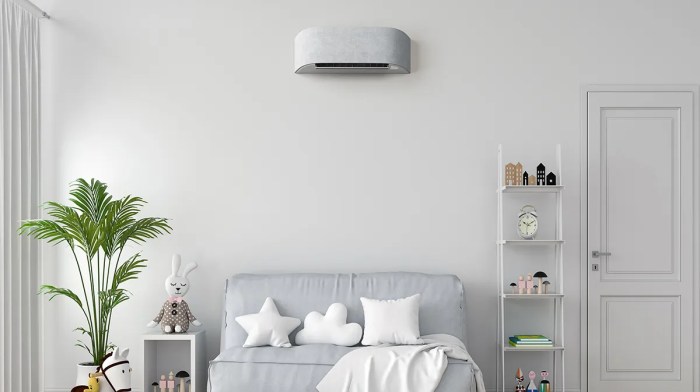
In conclusion, selecting the best air conditioner for your urban apartment involves considering factors like size, efficiency, and maintenance. By prioritizing these aspects, you can ensure a comfortable and cost-effective cooling solution tailored to your living space.
Expert Answers
What are the key differences between window, portable, and split air conditioners?
Window air conditioners are typically more affordable but may require installation, while portable units offer flexibility but are less efficient. Split systems provide better cooling but are more complex to install and maintain.
How do I calculate the right size air conditioner for my urban apartment?
To determine the appropriate size, measure the dimensions of your room and use a BTU calculator. This ensures that the AC unit can effectively cool the space without being overworked or inefficient.
Why is energy efficiency important for air conditioners in urban settings?
Energy-efficient models help reduce electricity bills and minimize environmental impact. Ratings like EER and SEER indicate how efficiently an air conditioner uses energy, making them ideal for urban apartments.
What maintenance practices are essential for prolonging the lifespan of an air conditioner?
Regular servicing, filter cleaning, and ensuring proper installation are crucial for maintaining the efficiency and longevity of an air conditioner in an urban environment.



![[EUROPE] Best A/C for HA Integration - Hardware - Home Assistant Community](https://ac.harianhaluan.com/wp-content/uploads/2025/10/e8bb70a96ac2d3a54932cf170f3003fea5438a8b-120x86.png)